
Running a Sex Offender Check in Zapata County
The official starting point is the Texas Public Sex Offender Registry maintained by the Texas Department of Public Safety. Zapata County does not publish a separate local registry list or map. Search the DPS system with the county filter, then use the person profile, map, and update fields to test whether a result fits the person or place of concern. A name alone is not enough. Compare the photograph, date of birth or age, physical traits, SID when available, and last verification details.
Zapata County residents also have a local verification route. The Sheriff is the registration authority for people who live in the county's unincorporated communities. The published office number is 956-765-9960. Call that line to confirm the current registration contact or to report a precise data concern. The county has no verified sheriff app, email alert tool, or online registration desk, so those channels should not be assumed.
Zapata County Registry Covers Rural Places
Zapata County has no incorporated city, town, or village. Zapata, San Ygnacio, Falcon, Falcon Lake Estates, Las Palmas, and Medina are census-designated places or unincorporated communities. That detail changes how a sex offender search should be framed. A city-only query for Zapata may leave out records tied to rural postal labels, another CDP, or an address outside the central place name.
Use the county dropdown first. Then repeat the check with a known name, address, city or ZIP, and the map where those facts are available. This broad-first method is especially useful across nearly 1,000 square miles of ranch land, lake frontage, and small communities. A map pin can help orient the reader, but rural geocoding is not exact. The reported address and verification date deserve more weight than the apparent position of a pin.
The official DPS registry search screen shows the state tools assigned to a Zapata County registry check.
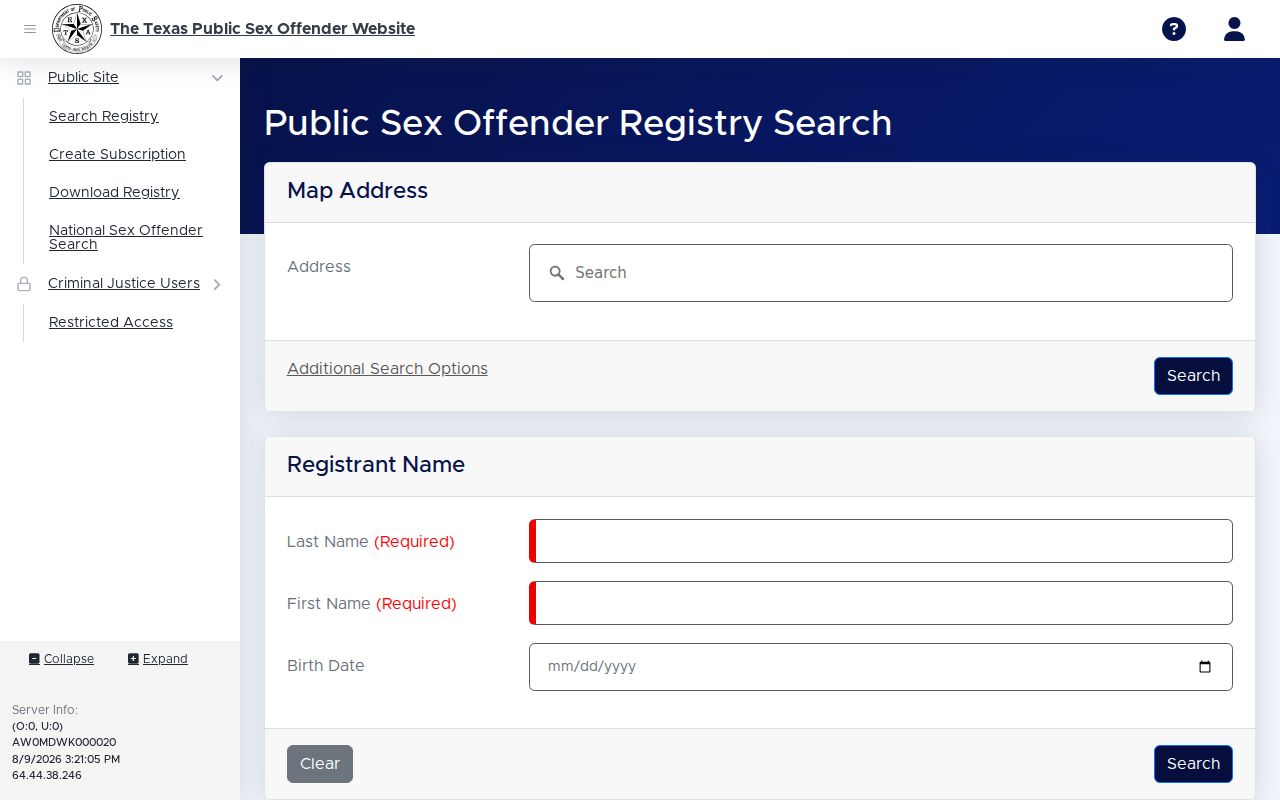
The interface gives Zapata County readers several routes when one place-name search does not return a sound match.
Searching the Texas Public Sex Offender Registry
Texas DPS runs the public registry under Code of Criminal Procedure Chapter 62. It is free to search, and the controls support both identity-based and place-based checks. Start with the least ambiguous facts you know. Keep in mind that the interface can change, so field labels and map choices should be read on the live DPS screen before each search.
- Open the official DPS registry and review its conditions of use.
- Select Search by County and choose Zapata for the broad local result set.
- Repeat by name, SID, address, city or ZIP, or map when a specific fact supports that route.
- Open the full profile and compare the photograph, traits, offense, address, risk level, status, and latest update.
The field inventory below reflects the official controls documented for the Texas registry. No single field is a substitute for comparing several identifiers.
| Field or Control | Type | Required | Use in Zapata County |
|---|---|---|---|
| Search by Name | Tab or mode | Mode-specific | Enter first and last name; check partial-name behavior live |
| Search by Address | Tab or mode | Mode-specific | Street, city, ZIP, and radius or map route |
| Search by County | Dropdown | Mode-specific | Select Zapata to avoid CDP and postal-name gaps |
| Search by City or ZIP | Text or dropdown | Optional route | Useful as a second pass after the county search |
| Map Search | Map or mode | No | Shows geographic results; rural pins may be imprecise |
| SID | Identifier | Optional | Strongest exact key when known |
| Submit / Clear | Buttons | Not applicable | Runs a query or removes prior criteria |
Zapata County Sex Offender Registration
With no municipal government layer, the Zapata County Sheriff performs the local registration role for residents throughout the county. The official county directory lists the office at 7th Avenue and Hidalgo Boulevard in Zapata, with a published phone number of 956-765-9960. No separate registration-unit name, appointment hours, direct extension, online form, or fee was found. A registrant should call before appearing, and a member of the public should use the same line to route a fact-based compliance concern.
Texas law generally requires a person with a registration duty to report within seven days of arrival or on the first date allowed by local policy, report required changes, and complete periodic verification. Failure to comply is a felony. The sheriff handles the local report, while DPS maintains the public state record. That division explains why an update may begin with the Zapata County office but appear later in the statewide system.
Texas DPS describes the statewide registration and public-notification program that supports the sheriff's local work.
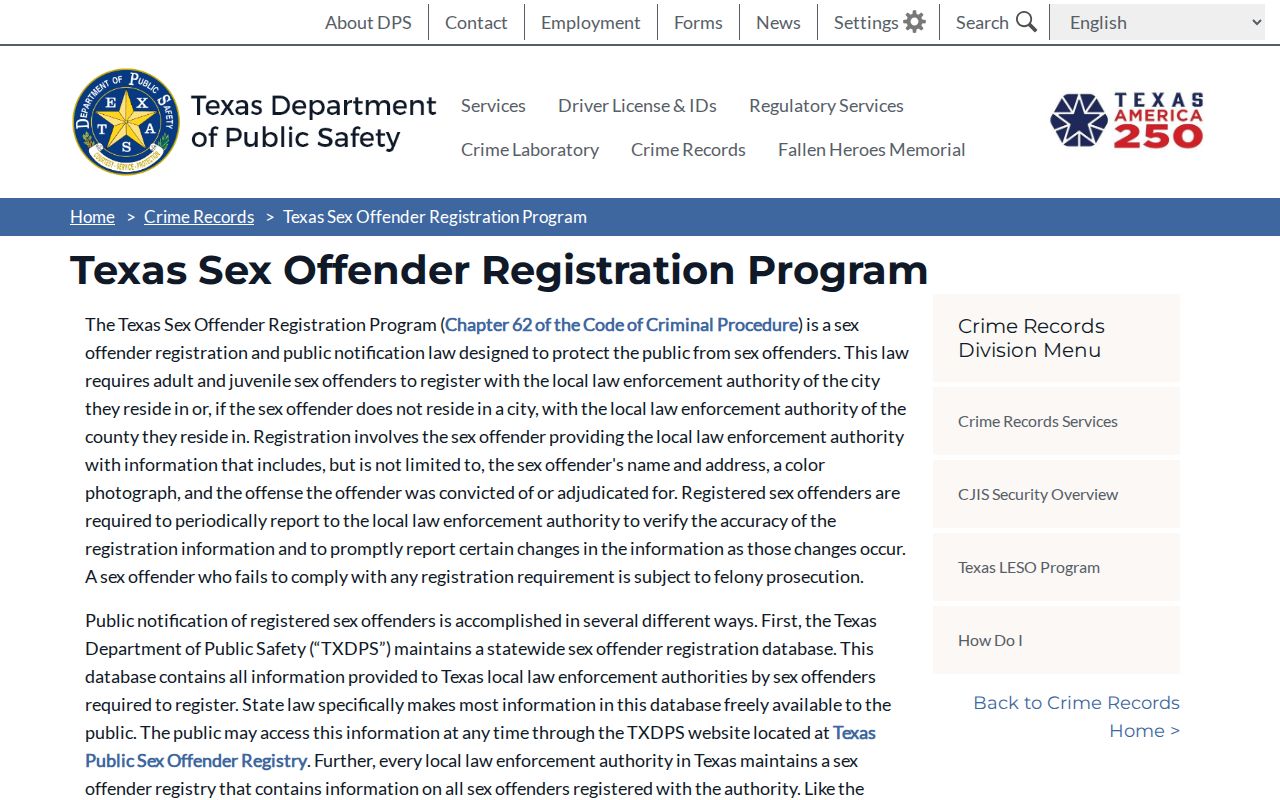
The state program page gives context for duties that the Zapata County Sheriff applies through the local registration channel.
What a Registry Profile Shows
A registry profile is a focused public-notification record, not a full criminal history. It combines reported identity details, a public address, the qualifying offense, and registration data. Some sensitive fields are withheld by law. Readers should use the profile to compare facts and understand the registration record, not to infer current custody, an open warrant, active supervision, or the full course of every court case.
| Name & Aliases | Identifying name and reported aliases, with an SID or registry identifier when public |
|---|---|
| Photo & Description | Current color photograph, sex, race, age or birth data, height, weight, hair, eyes, scars, marks, and tattoos as reported |
| Registered Address | Public residence or other public location categories where Texas law makes them available |
| Offense Information | Description, statute and jurisdiction, conviction or adjudication date, sentence-related dates, and limited victim category data when published |
| Risk & Duration Clues | Risk level plus offense facts that must be read separately from the length of the registration duty |
| Status & Verification | Registration authority and last verification or update information |
| Not Public | SSN, driver-license number, phone numbers, online identifiers, victim identity, specified work data, and other DPS-only information |
Note: A Zapata County registry entry does not establish that a person is wanted, incarcerated, or still under court supervision.
Zapata County Registry Risk Versus Duration
Texas uses risk levels as a public description of assessed danger. It does not use those levels as a simple clock for how long each person must register. Duration is tied mainly to the offense and statutory category. Level 1 describes low danger and a person not considered likely to reoffend sexually. Level 2 reflects moderate danger and possible continuation. Level 3 reflects serious danger and expected continuation. Civil Commitment marks a court-designated sexually violent predator population.
A reader should therefore examine both parts of a Zapata County profile. Risk speaks to assessment and notification. The offense-based category speaks to ten-year, lifetime, juvenile, or extrajurisdictional duration. A low numbered level does not by itself prove a short duty, and a lifetime duty does not by itself reveal when the conviction occurred.
Registration Requirements and Levels in Texas
Texas registration began in 1991 and later gained specified retroactive reach. The table separates the duration categories from the risk labels because they answer different questions. Verification frequency also varies. Civilly committed people verify every 30 days. People with two or more sexually violent offenses verify every 90 days. Other schedules depend on Chapter 62 and the person's circumstances, so the current profile and registration authority should be checked.
| Category | Duration or Meaning | Public Reading |
|---|---|---|
| Adult lifetime | Lifetime for listed sexually violent and repeat or reportable categories | Offense-based duration |
| Adult ten-year | Until ten years after dismissal or discharge, release, or completion of supervision, whichever is later | Offense-based duration |
| Juvenile ten-year | Generally ten years from disposition or completion, whichever is later, subject to juvenile provisions | Juvenile-court rules can affect the duty |
| Extrajurisdictional | Until the duty expires under controlling foreign, federal, military, or other law | Check the originating jurisdiction |
| Risk Levels 1, 2, 3 | Low, moderate, or serious assessed community danger | Does not set duration |
| Civil Commitment | Court-designated sexually violent predator population | Thirty-day verification schedule |
The DPS registry FAQ explains risk levels, duration, and verification duties behind these categories.
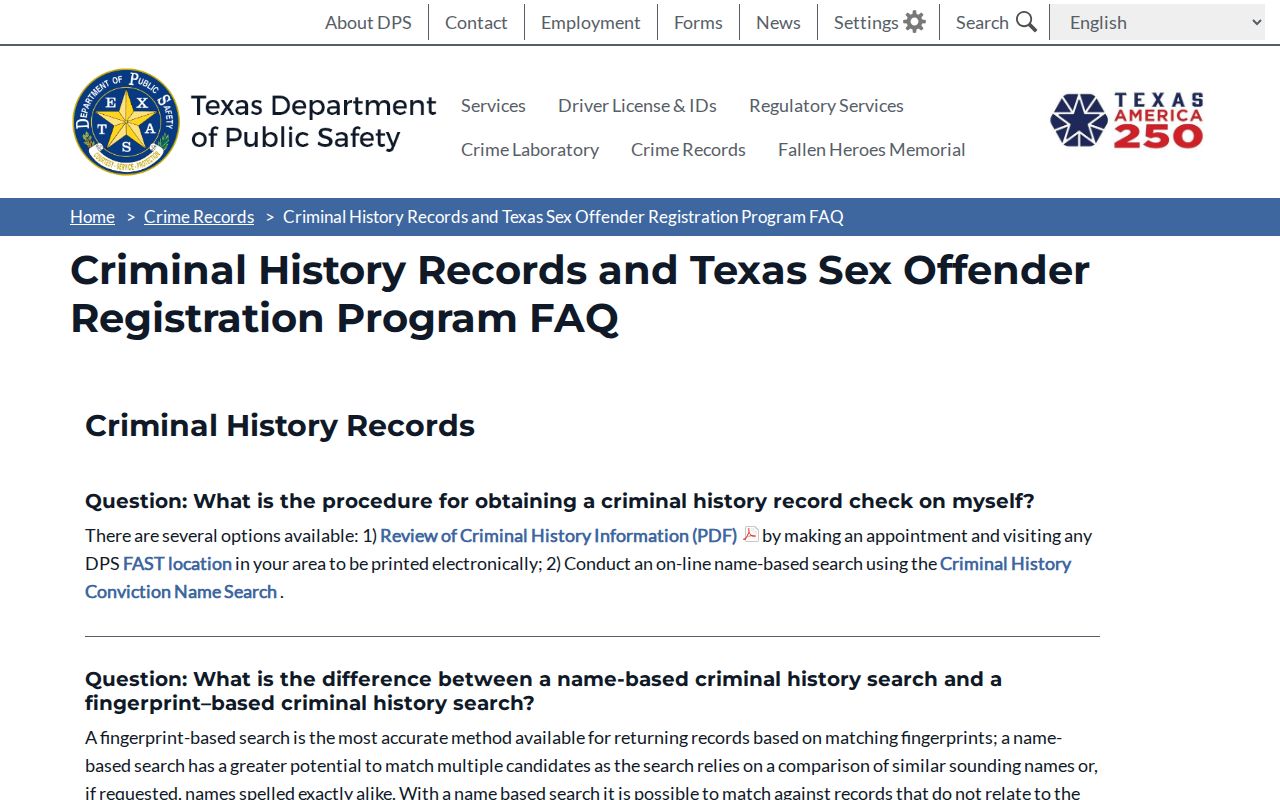
The source helps keep Zapata County risk labels separate from the offense-based registration term.
NSOPW Extends Zapata County Registry Searches
The Department of Justice National Sex Offender Public Website, known as NSOPW, searches participating jurisdictions across state lines. It is useful when a person recently moved, when the qualifying case arose outside Texas, or when a family safety check spans more than one state. It does not replace the Texas DPS profile. NSOPW passes through records from participating jurisdictions and may display a notice when a source is not available.
For a Zapata County result, return to the DPS detail page for the Texas source fields and latest state status. For an out-of-state result, open that state's official registry. Compare the same set of facts across sources: photograph, date of birth or age, physical description, reported address, offense jurisdiction, and update date. Avoid treating a national no-result screen as proof that no duty exists.
The official NSOPW search is the national layer assigned to this Zapata County sex offender check.
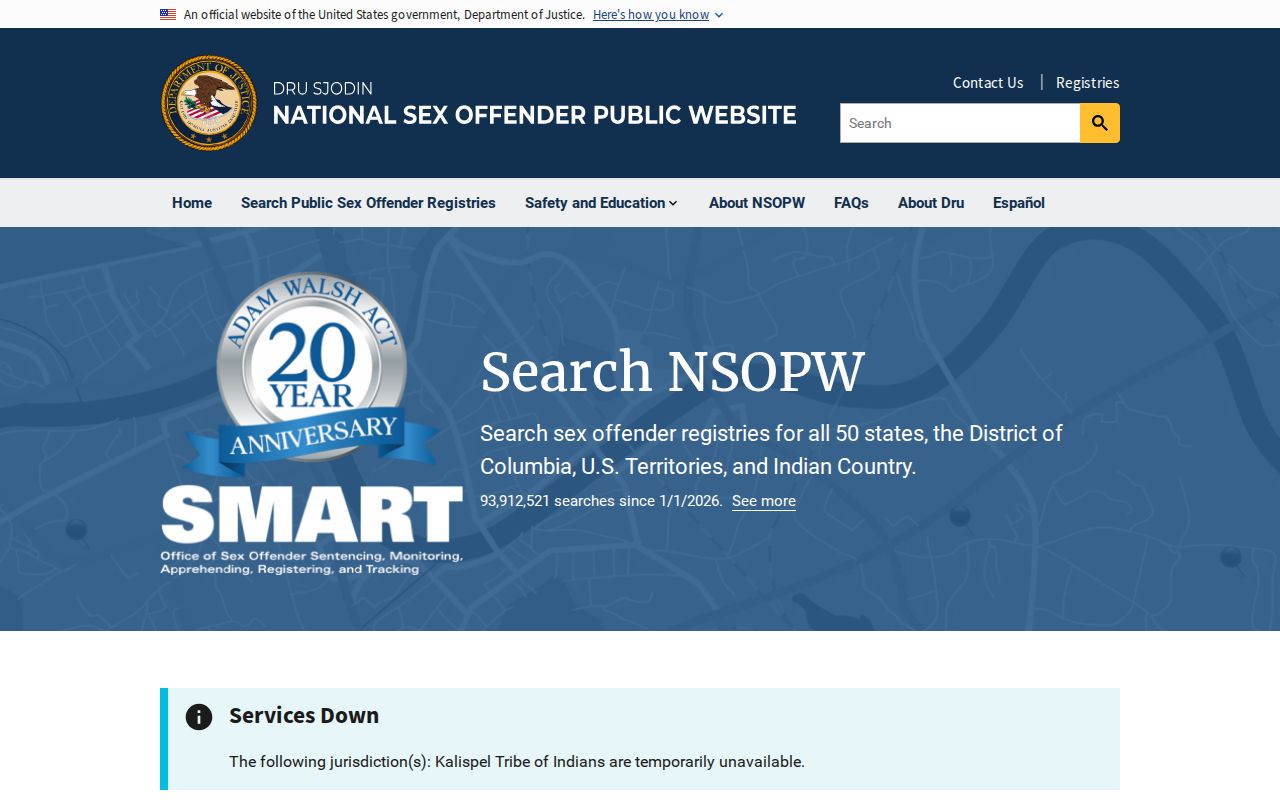
The national interface is most useful as a second source when a registry trail crosses the Texas border.
When Zapata County Registry Data Looks Stale
Start with the date shown on the official profile. Compare the photo, SID, physical traits, offense jurisdiction, and last verification before deciding that an address is stale. If the person may have crossed a state line, check NSOPW and the official registry for the other state. A rural map pin that seems misplaced may reflect geocoding limits rather than a missed report.
When a factual mismatch remains, record the profile URL, the field at issue, and the reason it appears wrong. Report the discrepancy to the Zapata County Sheriff at 956-765-9960 or to DPS Sex Offender Registration at 512-424-2800. Give facts, not a public accusation. For an emergency, call 911. Do not approach the listed home, watch its occupants, or publish a claim that a person failed to register.
Zapata County Registry Community Notification
DPS and local authorities provide public notification under Chapter 62. A high-risk or civil-commitment move can prompt mailed postcards to nearby homes and businesses. Public DPS subscriptions or data products may also be available through an account, but the live registry must be checked for the current alert function. No separate Zapata County email or proximity-alert service was verified.
Notification has a narrow purpose: awareness and sensible safety planning. It does not grant access to private land or permission to contact the listed person or household. Postal delivery, a map display, and a profile update can also occur on different schedules. When a notice and the registry appear to conflict, use the current DPS profile and ask the sheriff to route a factual question.
Lawful Use and Community Notification
Registry information should support family and community safety. Read it in context, verify identity through multiple fields, and keep the registration record separate from court, custody, and warrant records. Texas has no single statewide residence-distance rule that applies to every registrant. A parole or community-supervision condition may impose a limit, and a local ordinance may differ, so a map should not be used to declare an address unlawful.
Misuse is a crime: Texas Code of Criminal Procedure Chapter 62 supports public safety access, not harassment, threats, injury, trespass, vigilantism, or any other crime against a registrant or household. Using Zapata County registry information to commit a crime is itself criminal conduct.
A sound Zapata County sex offender check ends with source verification. Use the sheriff or DPS for registration facts. Use the court clerk for a filed case, and the proper jail or corrections system for custody. Those records may relate to the same person, but none is a substitute for the others.
Zapata County Registry Address Limits
Falcon Lake, ranch roads, U.S. Highway 83, border geography, and scattered postal communities make location searches less tidy than a dense city grid. Search by county before narrowing the map. Read an address as reported public information, not as a promise that a marker sits on the exact building. The registry's location is also not an invitation to visit.
If the location affects a family safety plan, save the official profile details and check the last update. Then direct a concrete discrepancy to the registration authority. That approach is more reliable than repeated map guesses, rumors, or an informal neighborhood post. It also gives Zapata County and DPS the precise record field they need to review.